Re-Entry.mp3
About Prometheus Bound
Prometheus Bound is an Ancient Greek Tragedy based on the myth of the Titan Prometheus. It is attributed to the Greek playwright Aeschylus (525-426 B.C.) but there is some scholarly debate that it might have been written as late as 415 B.C. The play is composed of mainly speeches and very little action since its protagonist is immobile and chained to the ground for the play. Prometheus Bound is the first part of a trilogy referred to as the Prometheia. Prometheus Unbound and Prometheus the Fire-Bringer exist in only fragments today.
Plot
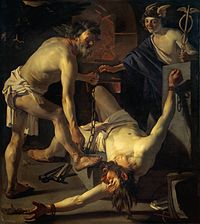
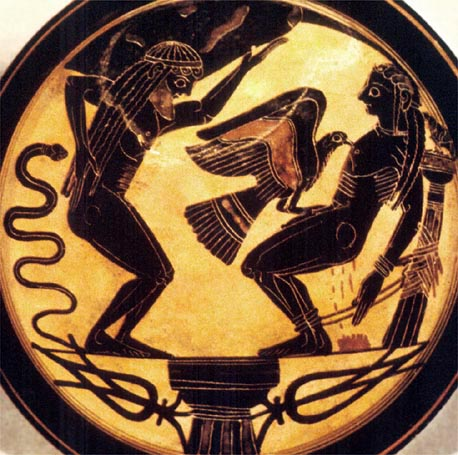
The play begins with three entities; Bia (force), Kratos (strength), and Hephaestus (the smith-God) chaining Prometheus to a mountain for thwarting Zeus’ plan to destroy humanity and by giving them the gift of fire. The Oceanids (the three thousand daughters of the Titans Oceanus and Tethys) appear and attempt to comfort Prometheus. Prometheus hints that he knows of a marriage that could bring down Zeus. Oceanus urges Prometheus to make his peace with Zeus and Prometheus reveals that he didn’t just give man fire but all the civilizing arts. Later on Prometheus is visited by the maiden Io. Io had been turned into a cow by the lustful Zeus and chased by the gadfly of Hera all the way from Argos. Prometheus foretells that her torment will end in Egypt and that Heracles would be her descendant thirteen generations later. The last action of the play comes when the messenger of Zeus, Hermes, comes down to Prometheus to demand who will overthrow Zeus. When Prometheus refuses to tell Zeus casts a lightning bolt that sends Prometheus into an abyss.
Our Thoughts
We feel that Prometheus Bound is a good example of Greek Tragedy. It is a prime example of the use of chorus within Greek drama and of the convention of trilogies within Greek drama. Interestingly enough it is an ancient example of adaptation and diverts from earlier accounts of the myth. Overall it is a good play and worth reading for the full experience of Greek Tragedy.