Re-Entry.mp3
BYZANTINE THEATRE
The Fall of Rome
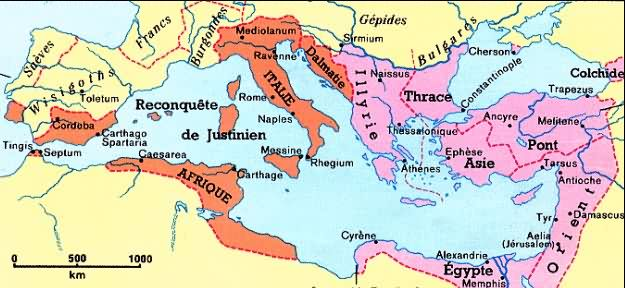
When we think of the fall of Rome in 476 C.E. it was in fact only the Western Roman Empire that collapsed. The Eastern Roman Empire created by Constantine in 330 C.E. and centered on what today is Istanbul, Turkey would go on until 1453. This created a unique culture that was centered on eastern and western cultures, as well as Greek and Christian influences.
Theatre of Byzantium
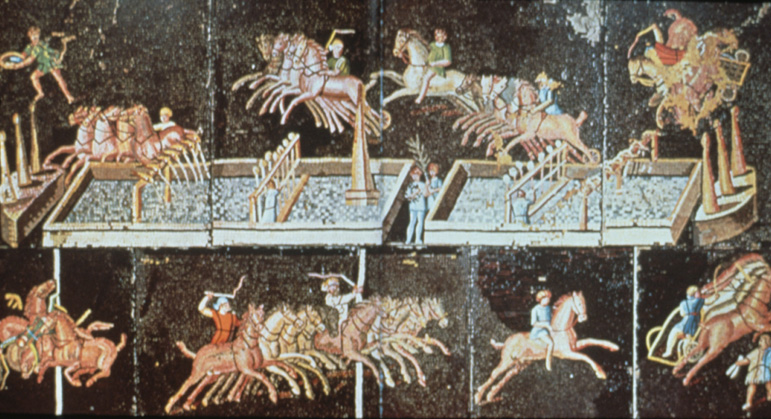
Byzantine theatre was very reminiscent of Roman theatre and had a strong background in Greek tradition and myth. Instead of the Colosseum they had the Hippodrome and many of the same entertainments occurred as in Rome.
Byzantine theater was unique in its attempt to create Christian dramatizations in the Greek language. The only work well-known as of today is the Christos Paschon which would go on to influence many of the first ‘mystery’ and ‘religion’ plays of Medieval Europe when the west would make contact with the east during the Crusades.
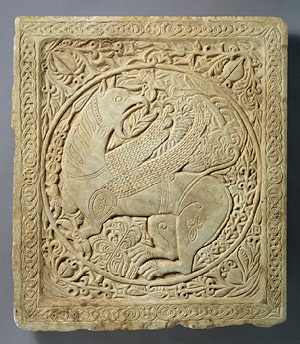
Another part of Byzantine theater was their unique use of imagery in their art and literature.
“In the cloisters, under the eyes of the brethren engaged in reading, what business has there that ridiculous monstrosity, that amazing mis-shapen shapeliness and shapely mis-shapenness? . . . Those fierce lions? Those monstrous centaurs? Those semi-human beings? . . . Here you behold several bodies beneath one head; there again several heads upon one body. Here you see a quadruped with the tail of a serpent, there a fish with the head of a quadruped. . . In fine, on all sides there appears so rich and so amazing a variety of forms that it is more delightful to read the marbles than the manuscripts.” – St. Bernard of Clairvaux
St. Bernard and others diatribes caused Western Medievalists to turn away from the so called ‘profane’ features of the Romanesque style. However in Byzantium there was no such pushing away of the old art form which in turn influenced their culture immensely. In the theater of the empire we see the influence of ‘uncensored’ Greek mythology still present within many religious and Christian centered plays.
Why is it Important to Today?
Byzantine theater kept conventions such as the Roman mime and pantomime in existence. The Byzantium Empire kept manuscripts of Classical Greek Drama in existence, without their efforts to preserve them we wouldn’t have the plays of Aeschylus, Euripides and Sophocles as well as the criticism of Aristotle. With the fall of the Byzantium Empire in 1453 these manuscripts became present once again within Western society thus influencing the Rennaisance.