Re-Entry.mp3
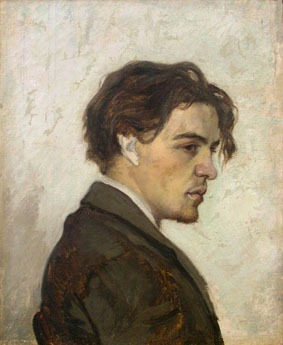
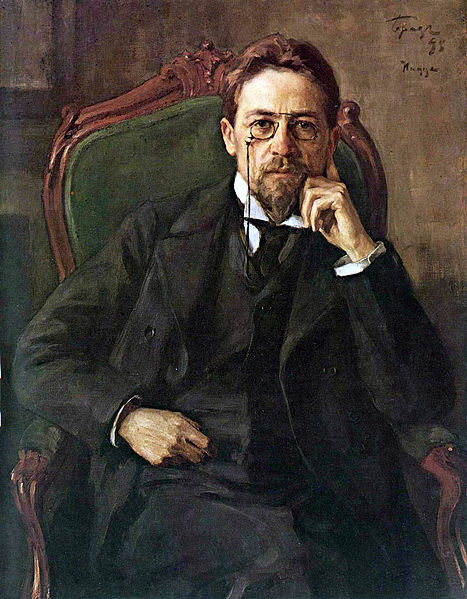
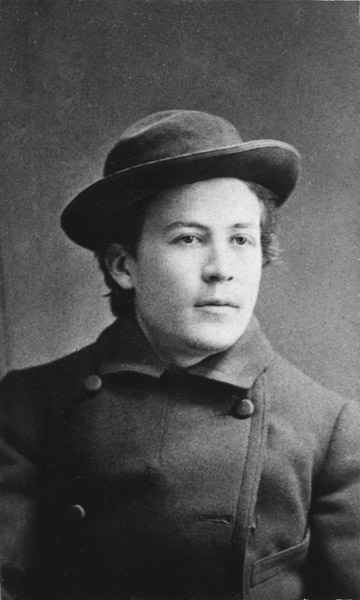
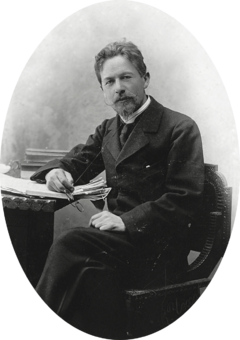
Anton Chekhov
-Any idiot can face a crisis - it's day to day living that wears you out.
Born: January 29,1860
Died: July 15, 1904
Birthplace: Taganrog, Russia
Death Place: Badenweiler, Russia
Childhood Years:
Anton and his siblings were raised in a hostile environment. His father was abusive both physically and verbally to them and his mother. His farther was the son of a former serf and ran a local grocery store. He described his mother as an excellent storyteller and homemaker that entertained him and his siblings with tales from her early life. Chekhov is remembered as stating, "We got our talents from our father, but our soul from our mother." His mother was a devout Orthodox Christian and taught here children well in the belief of God. However, in 1876 Chekhov's father was declared bankrupt after over using his finances on building a new home and to avoid going to prison fled to Moscow where his two oldest sons were attending college, abandoning his mother, younger siblings and himself. Because of this, they lived in deep poverty and were forced to sell almost all their possessions so Anton could finish his education. In 1879 he completed school and rejoined his family in Moscow having been accepted into medical school at Moscow University.
His early work:
Anton had taken full responsiblity for the welfare of his family. To help support them and pay for his student expenses, he wrote a daily short made up of humorous sketches and vignettes of Russian life. His work gradually earned him a reputation as a satirical writer of Russian street life and by 1882 he was writing for "Fragments" one of the leading publishers of the day. In 1884 he finally became a full fledged physician which he considered to be his real profession although he made a poor living from it because of his tendancies to treat the poor and less fortunate free of charge. His health started to take a bad turn when in 1885 he was regularly coughing up blood and diagnosed himself with tuberculosis though he refused to inform his family.
In early 1886 he was suddenly invited to write for a popular newspaper called "New times" which was owned and edited by millionare Alexey Suvorin who paid Anton a per line rate which doubled his old pay. Suvorin would become perhaps Anton's closest friend.
Soon Chekhov was gaining literary attention and was considered by top literary critics to have "real talent". One particular critic named Dmitry Grigorovich commented to Anton in letter telling him to "slow down, write less and concentrate on quality." This advice struck Chekhov harder than anything he had been told before. Feeling inspired by this advice, Chekhov began writing what would become some of his greatest works.
Throughout his Travels:
Chekhov began travelling from the furthest reaches of Russia to the northern island of Japan. Most of his travels were mainly for his practices as a physician, but he also took this time to write about his observations of mankind. However, travelling was difficult for him as his health was steadily declining and the drugs he was taking to keep himself on his feet were becoming a considerable burden on his finances. Throughout his travels, Chekhov observed as he put it "the extreme limits of man's degradation." Chekhov saw many horrors during his travels which inspired many short stories and books he had written. The horrible events he witnessed throughout his time abroad also inspired him to construct safe houses and care centers for the people in need as well as the obsession with the issue of prison reform.
The Theatre:
In 1894 Chekhov began writing a play called, "The Seagull". When the play opened on October 17, 1896 it was booed by the audience and the plays negetive reception made Chekhov renounce the theatre alltogether. But the play so impressed director Vladimir Nemirovich-Danchenko that he convinced a colleague to direct it for the Moscow Art Theatre in 1898. The play was a huge success and restored Anton's interest in playwriting. The theatre commissioned more plays from Chekhov and the next year the play "Uncle Vanya" opened.
In 1897 Anton suffered a hemorrhage of the lungs and was forced to move to a more habitable location in Yalta and was ordered by his physicians to live a calmer and less active life. While there he completed two more plays that would become great hits: Three Sisters and The Cherry Orchard.
Marriage and Death:
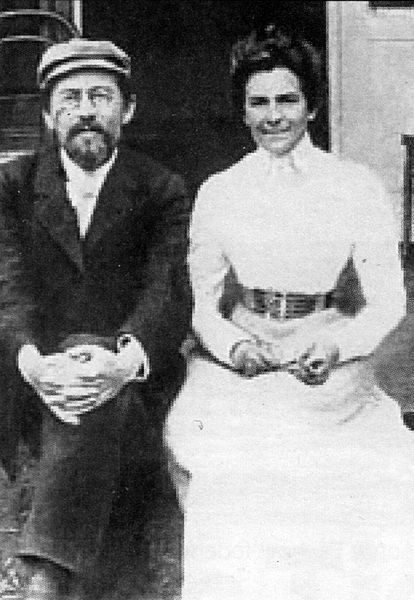
In 1901 Chekhov married Olga Knipper and was finally cleared of his tag name of "Russias most elusive literary bachelor." In 1902 Olga suffered a miscarriage and as Anton would die two years later they would have no children together.
In may of 1904 Chekhov's tuberculosis had become terminal. Anton moved with Olga to Badenweiler where he wrote letters to his family insisting that he was getting better. Chekhovs death has no become one of the great set pieces of literary history as it was retold by Olga and later on to be built up and fictionalized by more modern literalists. Olga wrote:
"Anton sat up unusually straight and said loudly and clearly (although he knew almost no German): Ich sterbe("I'm dying"). The doctor calmed him, took a syringe, gave him an injection of camphor, and ordered champagne. Anton took a full glass, examined it, smiled at me and said: "It's a long time since I drank champagne." He drained it, lay quietly on his left side, and I just had time to run to him and lean across the bed and call to him, but he had stopped breathing and was sleeping peacefully as a child..."