Re-Entry.mp3
Masks have always been important in the theatre, from Ancient Greece to modern times. Yes, they are used today, but they are the symbol of classical Greek theatre to us.
Their Usage
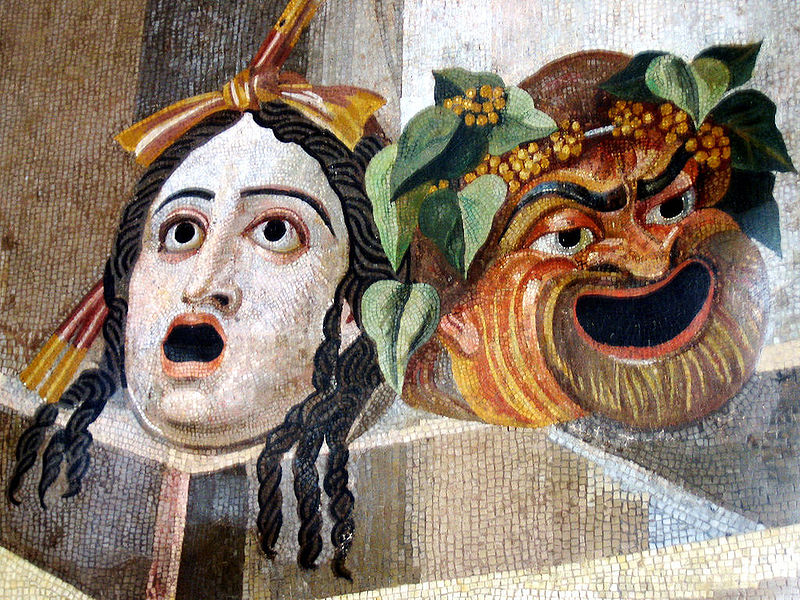
In Ancient Greek drama, masks were used to indicate the character being depicted by the actor and were created to represent a fixed emotion. They were also made for the actors in the chorus. Even though there were a number of chorus members, they all had the same mask because they were considered to be one character, creating a sense of unity.
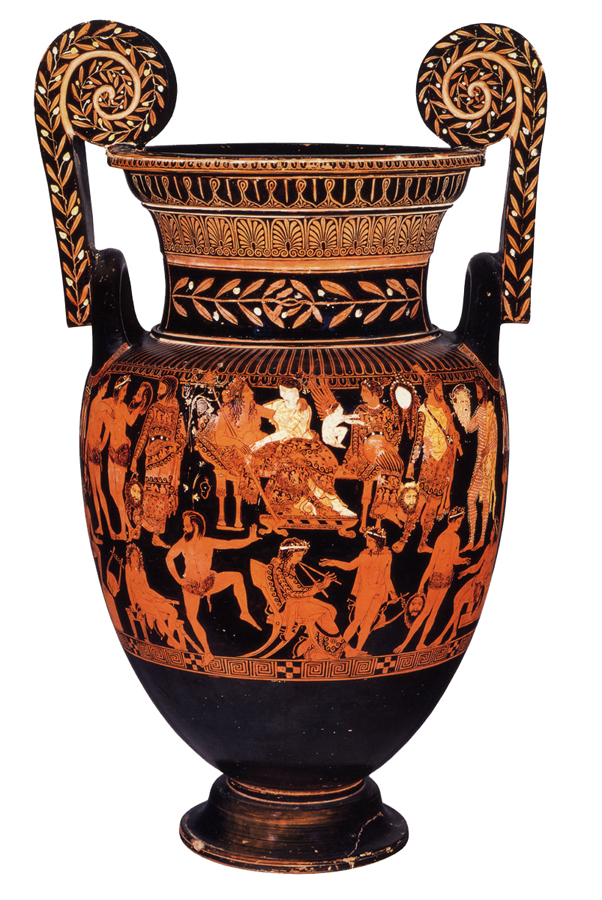
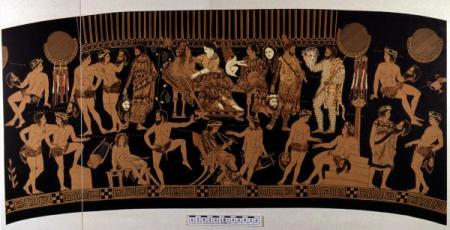
The Ancient Greek mask was an important part of the ceremonies, worships, and celebrations of Dionysus at Athens. There are a few vase paintings. One from around 400 BC, called the Pronomos vase. It depicts Dionysus and a cast from a satire play.
Note that in this painting, and in many others like it, the masks are being held by the actors, not worn. This gives a separation between the play and reality.
Because they had an exaggerated facial expression, the audience was better able to see the characters’ face. It also allowed one actor to play different parts. Everything an audience might need to know about a character’s background and personality, like gender, social status, and age.
What They’re Made Of
There is no physical evidence of the masks. This is because the masks were made of organic materials. Some possibilities of material are wood, leather, cork, or linens. Many times, they were dedicated to the altar of Dionysus after performances. Some people believe they also had metallic mouthpieces that improved the resonance of an actor's voice. This along with the structure of the amphitheatre helped the audience to be able to hear them. Also, the voice resonates in the head, and with a mask the voice is heightened and slightly altered.
What They Looked Like
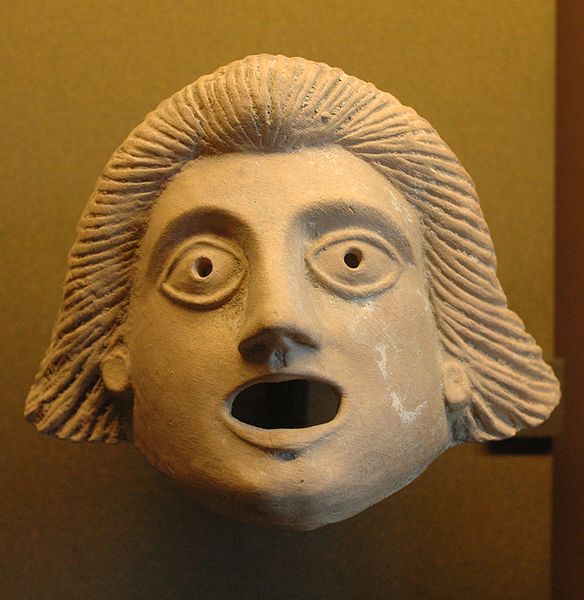
We can tell by illustrations that the masks were “helmet-like” over the whole face and head. There were holes for the eyes, but they were relatively small and didn’t provide very good visual range. And there was a hole for the mouth, which was also small because they didn’t want the audience to see the mouth during a performance. The rest of the head is covered by a wig mad out of human or animal hair, the ears being left open so that the actor could hear well enough because his vision was impaired from the mask.