Re-Entry.mp3
The Theatre of Pompey
Dates of Construction: 55 BC
Dates of Destruction: Was slowly deconstructed and buried over a thousand years.
Currently: Buried under todays buildings.
Capacity: 12,000
The Origin of building
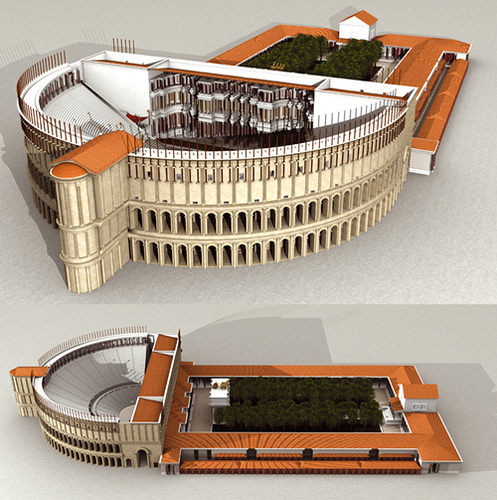
The theatre of Pompey was financed by Gnaeus Pompeius Magnus during his second consulship. He provided the money for this theatre to gain political popularity and the recognition of the masses. As the largest theatre ever build in both respects of place and time the Theatre of Pompey would carry Gnaeus' name for its active history of 600 years (although the building itself remained in use as a theatre until around 1455 AD!). The structure boasted the largest crypta of all Roman theatres and was used by many including patrons, actors and refreshment vendors. The theatre also housed many statues of famous artists and actors and large lavish fountains. It was because of this that the theatre was also used for public gatherings and meetings.
The highest part of the strutcure was the Temple to Venus Victrix (Pompey's personal deity). Many scholars believe today that this individual deity construction idea was used to prevent the structure from being seen as a self-promoting ideal.
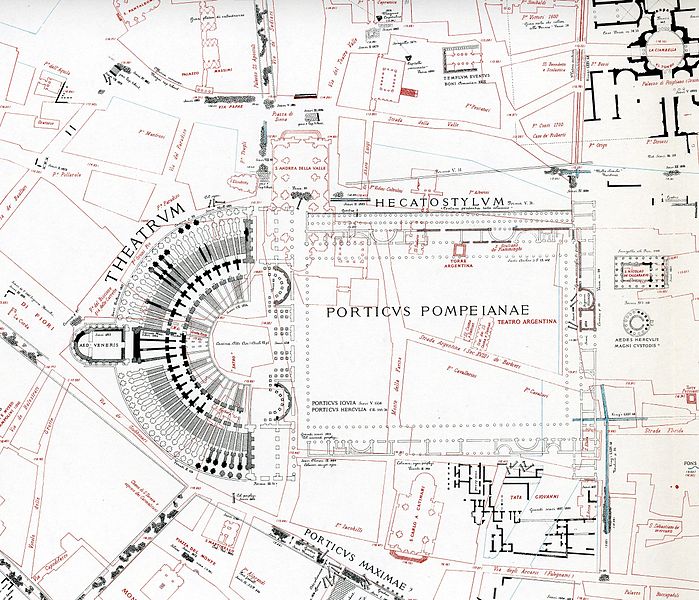
What remains of the building can still be seen on the Largo di Torre Argentina and was excavated by Mussolini in the 1920's along with the foundations and underground sections which can be found off the Via di Grotta Pinta. Vaults from the original theatre can be found in the cellars of restaurants on this street as well as in the walls of the hotel Albergo Sole al Biscione.
Its Architecture and Style
The Theatre of Pompey shares qualities of its architecture with many other Roman and Greek theatres. Much of the same influences came from the Greek construction ideas used for centuries. However, there are some key differences such as it being built on their own foundations instead of earthen works or a hillside and being completely closed off on all sides. Rome never build any permanent theatres within their own city walls until midway through the first century. It was quite common for Roman theatres to be temporary structures built from wood so they could be raised and brought down quickly if needed. Roman politicians usually halted any attempts to build stone theatrical venues for unknown reasons.
Pompey however, changed everything. He was inspired to build a permanent stone theatre so his supporters could meet and enjoy the theatre and being a heavy weight polititian enabled him to get the job done. It was his success in completing the Pompey theatre that inspired Julius Caesar to build his famous forum. Pompey had said that it was the Greek theatre of Mytilene that inspired the architecture that was used in his theatre's design and because his design was so complex and extravagant that he was able to bypass the laws that bound previous theatres to quick designs of wood.
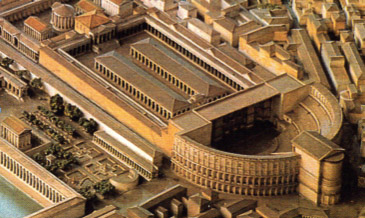
The design included stone vaults and foundations from the ground up with corridors underneath the seating which allowed quick in and out access for the audiences. The design took advantage of the "arch" which grated greater structure integrity. The stage of the theatre was attached directly to the auditorium making the entire structure enclosed all the way around. This idea went beyond that of the greeks and allowed for better acoustics and made entry to the building limited to avoid allowing "freeloaders" to enter the theatre unnoticed. The design of the theatre of Pompey would become the standard for other famous structures which still exist in Rome today such as the Colosseum and the Theatre of Marcellus.
An ideal spot for Murder
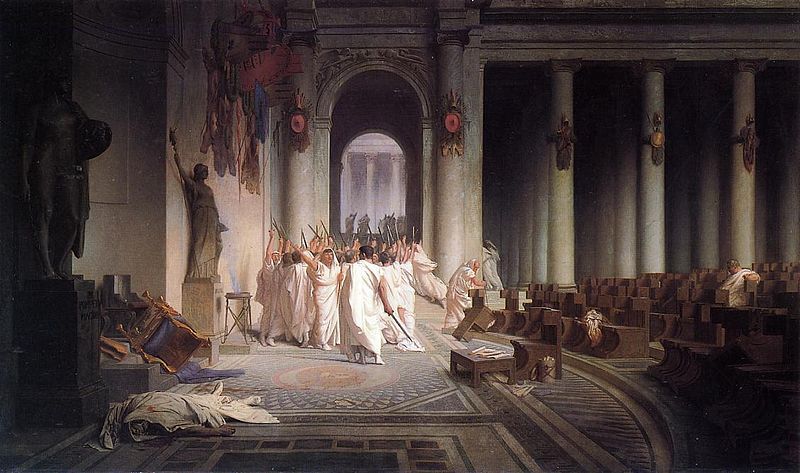
The theatre itself holds historic significance due to one of the most famous murders of all time taking which took place in large porticus behind the stage. It was a regular meeting place for the Roman senate in those days and on the Ides of March (march 15th) in the year 44 BC Caesar was murdered by his senate members as he was stabbed 23 times. This act was one of the most violent and memorable in Roman history and set the stage for the fall of the Roman Republic and the rise of the Empire. This event has inpired many books, plays and even films which still exist today.
The Theatre Today
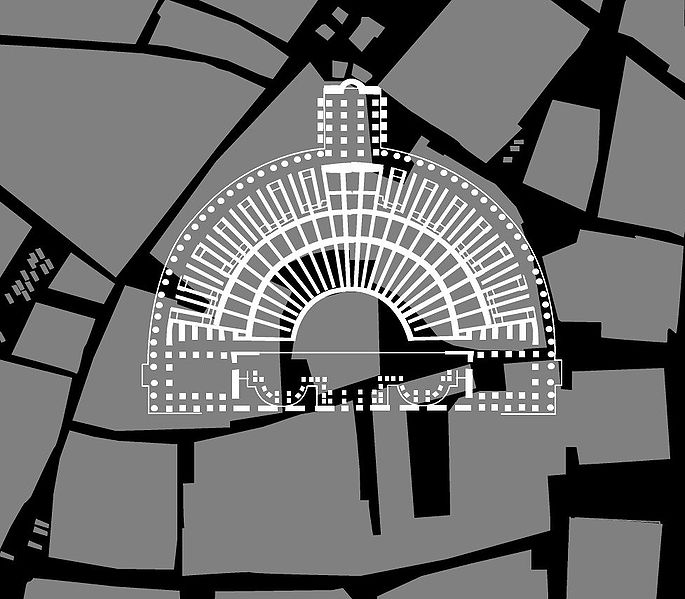
The theatre of Pompey no longer exists today as it did then. As I previously mentioned, the theatre fell into disrepair and much of it was dismantled and used to build other structures throughout the city. Most of what we have left of the original theatre is located in the cellars of the surrounding hotels, homes and restaurants. The largest sections that are still intact are found in the Palazzo della Cancelleria, which used much of its material from the exterior fragments of the theatre. Pieces of the theatre can be found all over the city of Rome (many pieces of which were extracted during archaeological digs). Interestingly enough the shape of the theatre is still visible from an aerial view because buildings that were built on the original foundation are curved from the theatre's original seating.
The theatre site today has been heavily plundered and nearly all of its original stones and columns are gone, however you can still find basement and sub-basement levels of the theatre as I mentioned before. However, most of what we know about the original design of the theatre was not discovered until archaeological excavations were conducted in 1997-2002 by a Dr. Antonio Monterroso.