Re-Entry.mp3
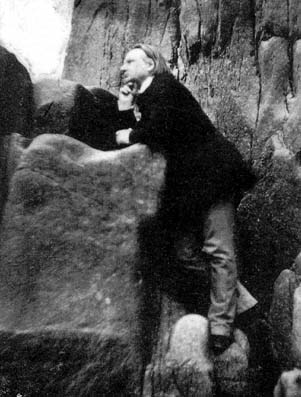
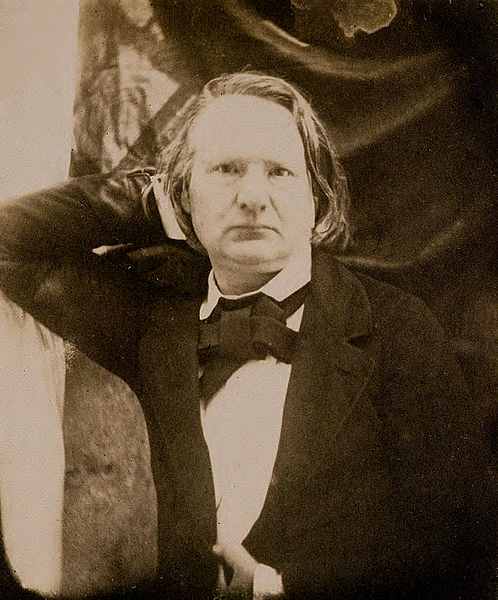
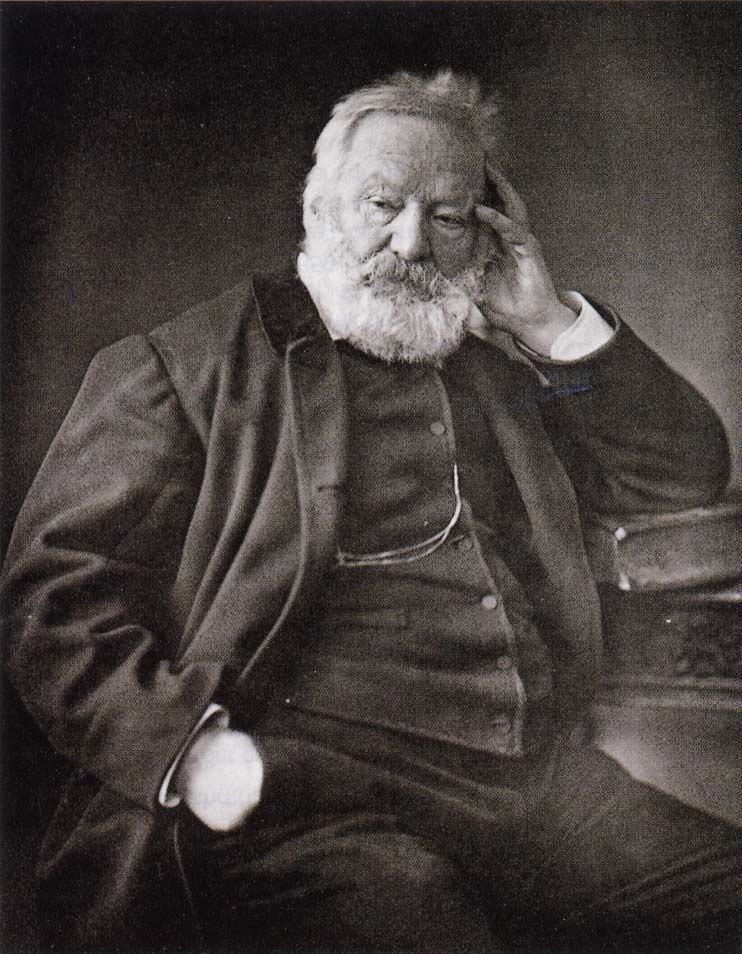
Victor Hugo
A great artist is a great man in a great child. - Victor Hugo
Born: Febuary 26,1802
Died: May 22, 1885
Birthplace: Besancon, France
Death Place: Paris, France
His Life
Hugo was the illegitimate son of Joseph Leopold Sigisbert Hugo and Sophie Trebuchet. He had two brothers from the same parentage as well. Hugo spent most of his life France with the only exception being when he lived in exile because of Napolean's Coup detat in 1851. He only returned to France after Napolean was forced from power as a result of the French defeat in the Fanco-Prussian war in 1870.
Many great historical events happened during his life and especially in his youth. Many scholars believe that these events greatly influenced his works. During his childhoold along Napolean was declared Emperor and the Bourbon Monarchy was restored. His father and mother were always at ends with eachother because of their political and religious stand points (which were extremely contrasting). His father was an officer of Napoleon and considered him a "hero". His mother was very much against Napoleon and was even having an affair with General Victor Lahorie (who was executed in 1812 for plotting against Napoleon). Because of this, Hugos family was always on the move, moving from location to location in France. It was because of all this constant movement that Hugos mother eventually separated from his father in 1803 and she took over the primary responsibility of his education and religious upbringing.
Victor fell in love and became engaged too his childhood friend Adele Foucher. His mother was against this union and Victor being close to his mother didnt marry Adele until his mother passed away in 1821. Their first child died in infancy, but later had the children Leopoldine, Charles, Francois-Victor and Adele. However, utter shock and devistation would encompass him later on when he learned of his daughter Leopoldine's death at the age of 19 and her new young husband due to drowning after a ship they were on overturned.
His Works
Victor was most famous for his poetry. Considered by many to be the greatest French poet of all time Victor was celebrated and recognized by everyone from poverty to Royalty. Even his earlier works brought him fame and success when he was only 21 years old. King Louis the XVIII gave him a royal pension for his first collection of poetry. His second works known as Odes et Ballades cemented him into a great renown poet and a natural master of lyric and creative song.
Writing was not his only forte' however as his artistic talent began to show in every aspect of the written word. In 1829 he published his first novel: The Hunchback of Notre-Dame. Not only did this novel hit it big and influence a new apprecation of pre-renaissance buildings and attract massive amounts of tourists to the much-neglected Cathedral of Notre Dame, it would also be a precursor to his later great play: Les Miserables.
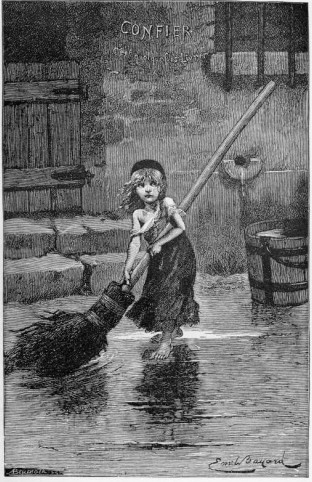
Les Miserables was originally being planned by Victor as a novel about social injustice in the 1830's, however the book didnt see the light of day until 1862. He knew he had crafted a masterpiece and put the publishing rights of the book up to the highest bidder. Upon its publication it had sold out in mere hours and although the critics were generally hostile towards the book because of its depth into the issues of injustice, the masses loved it. Its messages were so powerful, that the issues it covered were soon on the agenda of the French National Assembly. The novel has since been adapted for the cinema,television and is still to this day one of the highest grossing and performed stage plays. It is interesting to note that Hugo was on vacation when Les Miserables was released. He sent a message which contained the single letter "?" to his publisher, who replied with a single "!".
Hugo went on to write more novels that were either not as popular or rode on the coat-tails of Les Miserables popularity. He even openly admitted in his later years that his popularity was declining because of the new naturalism and realism movements that were overshadowing the romanticism ideals which he had grown up with. His final novel called "Ninty-Three" was published in 1874 and dealth with the reign of terror during the French revolution. Today, Ninety-Three is considered on par with Hugo's better known novels.
Politics and Religion
As stated above, Hugo's early years were dominated by the veiws of his mother. During his youth he was strongly attached to the belief of faith and king. As he grow older however, he began to abandon such beliefs and ideals and lean far more towards the views of his father which were more devoted to republican and freethinking. Victor obtained a position in the Academie Francaise in 1841 which made him extremely active in French politics. King Louis-Philippe elevated him to the peerage and he entered the High Chamber where he spoke against the death penalty and social injustice. He worked for freedom of the press and self government for Poland and in 1848 he was elected to the Consitutional Assembly and the Legislative Assembly.
However when Naploeon seized complete power in 1851, Victor openly declared himself a traitor to France and he fled in exile to Saint Peter Port, Guernsey. Hugo had a strong belief that the death penalty was wrong and was consitantly fighting against it in several countries. Upon his return to France he was elected as a member of the senate and continued to do what he felt was best for the people, even believing that all art comes from the thoughts and feelings of those around the author. He said, "any work of art has two authors : the people who confusely feels something, a creator who translates these feelings, and the people again who consecrates his vision of that feeling. When one of the authors dies, the rights should totally be granted back to the other, the people".
Death and Memory
Near the end of his life, Hugo again encountered great loss. With the death of his wife in 1868 and the deaths of his two sons, the death of his mistress in 1883 and his daughters internment in an insane asylum, Victor suffered a mild stroke. On his 80th birthday the greatest tribute to a writer was held and he was presented with a Sevres vase (traditional gift for sovereigns). The people held one of the largest parades for him in history.
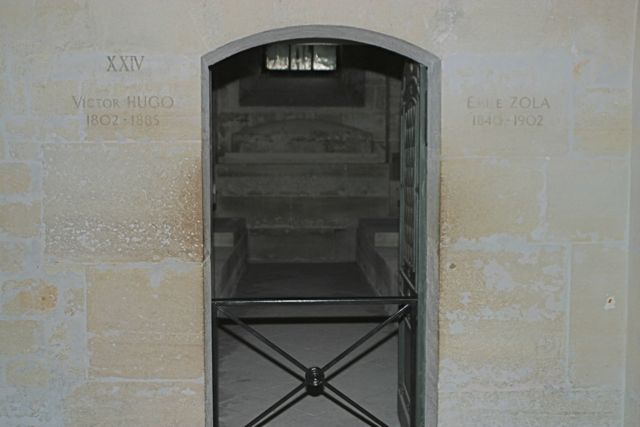
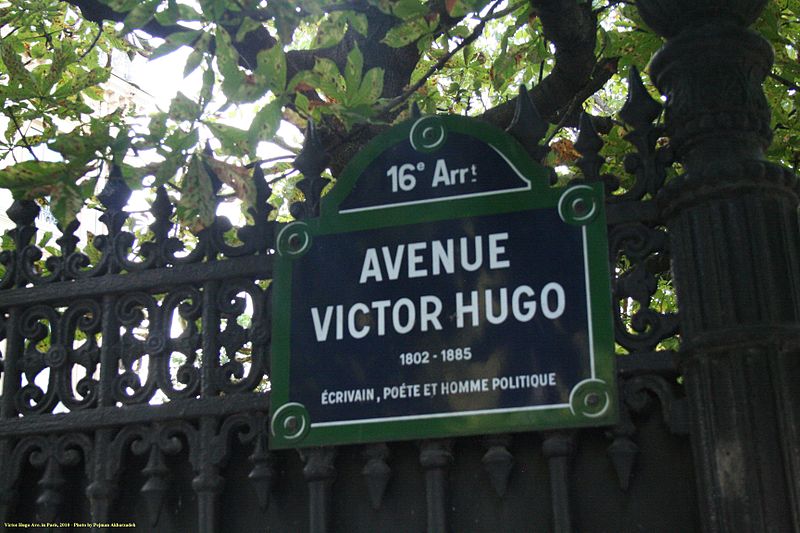
On Mary 22, 1885 Hugo died at the age of 83. His death created great national mourning as he was revered as one of the greatest figures in all of literature and a stateman that had a hand in creating the Third Republic and democracy of France. Over two million people were present at his funeral procession in Paris. Buried next to him are such figures as Alexandre Dumas (writer of the three musketeers) and Emile Zola. The avenue where he died in Paris is named after him.